
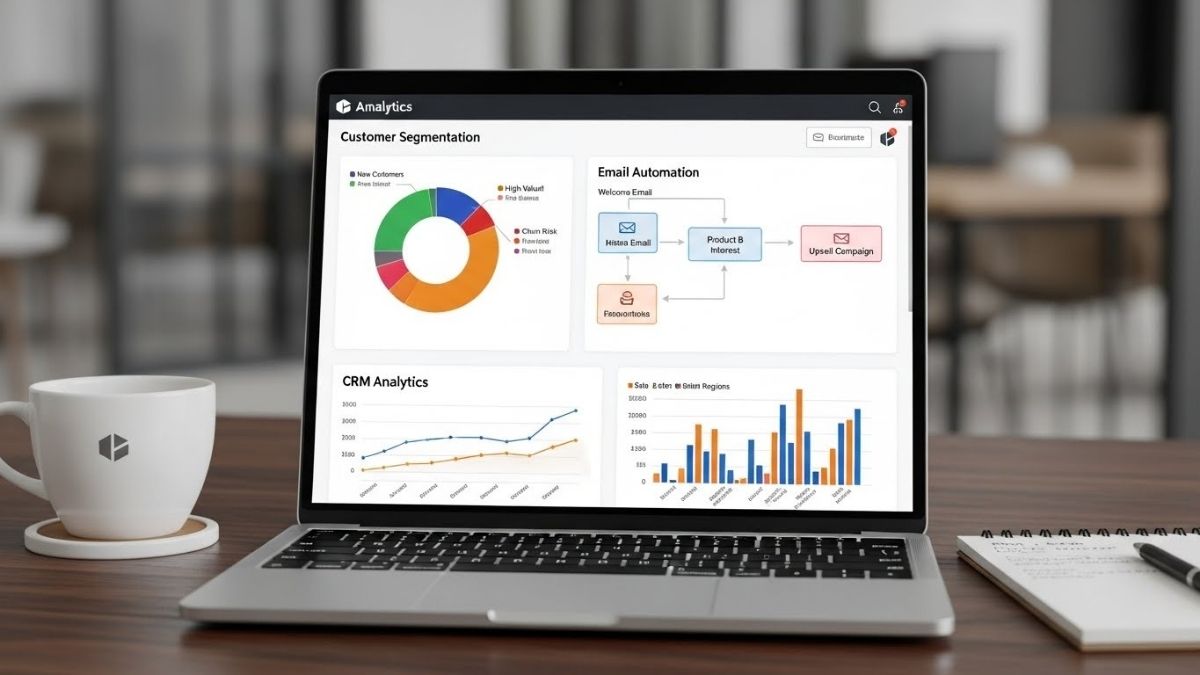
AI is no longer a futuristic concept—it’s a critical tool transforming marketing right now.
AI tools help 90% of marketing professionals automate customer interactions, and AI-powered marketing automation has enabled 88% of them to personalize the customer experience across channels.
If you’re new to the technology, starting with AI in marketing automation might seem daunting. This comprehensive guide will walk you through building your first AI marketing automation system from scratch. You’ll learn the basics, see real-life examples, and follow simple steps to implement marketing automation with AI. We designed everything with beginners like you in mind.
Ready to launch your campaigns 75% faster? Let’s tuck in!
Understanding AI in Marketing Automation
The AI marketing market will grow from USD 15.84 billion in 2021 to an estimated USD 107.50 billion by 2028. This remarkable growth clearly shows how AI is reshaping marketing practices.
What is AI Marketing Automation?
AI marketing automation uses artificial intelligence technologies to optimize marketing processes through data analysis, machine learning, and natural language processing (NLP).
AI marketing systems stand apart from basic automation tools because they can:
-
Analyze massive datasets to spot complex patterns.
-
Predict what customers might do next.
-
Make immediate, data-driven decisions without human intervention.
AI marketing automation blends smart technology with human creativity to:
-
Learn from and understand modern customers at an individual level.
-
Deliver individual-specific, relevant communications.
-
Use information to uncover hidden patterns and insights.
-
Optimize repetitive tasks like email campaigns and social media management.
How It Differs from Traditional Automation
| Feature | Traditional Automation | AI Marketing Automation |
| Foundation | Rule-based systems (If X, then Y) | Analytical insights & Machine Learning |
| Intelligence | Fixed, follows preset rules | Adaptable, learns and improves over time |
| Data Use | Basic filtering and routing | Processes big data, spots hidden patterns |
| Function | Executes tasks (e.g., sending an email after sign-up) | Orchestrates the entire marketing workflow |
The biggest difference is AI’s power to orchestrate marketing. It coordinates complete workflows and adjusts dynamically based on live results and customer actions.
Why AI Matters in 2025 and Beyond
Organizations are deploying more AI agents, autonomous systems that will optimize, scale, and personalize marketing at new levels. Marketing teams can focus on strategy and creativity instead of routine tasks.
-
AI now handles advanced functions like campaign optimization and real-time personalization.
-
AI systems will manage tasks that once needed full teams, such as competitor analysis or audience segmentation.
-
Companies will spend less while their customers’ experiences improve. Businesses that adapt quickly will gain a competitive edge through more targeted, efficient, and effective campaigns.
Top Use Cases of AI in Marketing Automation
AI marketing automation is changing how businesses connect with customers through specialized applications. Here are the most impactful use cases:
-
Predictive Lead Scoring: AI algorithms analyze CRM data, behavioral patterns, and social interactions to identify leads with the highest conversion potential. Sales teams using AI report 98% improvement in lead prioritization.
-
Personalized Email Campaigns: AI looks at customer data to customize content, sending times, and product recommendations. Personalized emails generate 6x higher transaction rates compared to generic messages.
-
Live Campaign Optimization: AI enables quick campaign adjustments based on live data processing. Marketing teams can dynamically move budgets from underperforming placements to high-impact ones, cutting down on wasted spend.
-
Automated Content Generation: AI creation tools smooth workflows and overcome creative blocks, generating text, images, and videos. 58% of marketers using generative AI report better content performance.
-
Customer Segmentation and Targeting: AI goes beyond basic demographics by analyzing purchasing behavior, browsing history, and sentiment. It builds detailed customer profiles for precise targeting, pushing conversion and retention rates substantially higher.
-
Chatbots and Conversational AI: AI-powered chatbots handle instant 24/7 customer support, collect data, and share product information (e.g., Starbucks taking orders via messaging).
-
Performance Monitoring and Reporting: AI reporting tools provide practical insights by tracking key metrics live. They can even predict ROI for future campaigns by monitoring every step of the customer journey.
-
Data Integration and Anomaly Detection: AI processes massive datasets to find unusual patterns that humans would miss, alerting teams to hidden issues (or unexpected product buzz) and allowing for quick responses.
Choosing the Right AI Tools for Your Needs
Companies see 68% better SEO and content marketing ROI when they use AI. Here are the key tool categories for your foundation:
| Tool Category | Example Tools | Core Functionality |
| AI-Powered CRM & Email | Salesforce Einstein, HubSpot, Seventh Sense | Predicts customer needs, finds optimal email send times, and automates follow-ups. |
| Analytics & Reporting | Semrush Copilot, Tableau, Google Analytics | Combines data from multiple sources to deliver reliable BI and builds custom performance dashboards. |
| Content Generation & SEO | Writesonic, SurferSEO, Frase | Optimizes content for search engines, suggests keywords/headings, and creates content briefs/drafts. |
| Social Media Automation | Buffer AI Assistant, Hootsuite OwlyWriter, ContentStudio | Creates captions, handles cross-platform messaging, and predicts post performance to maximize engagement. |
Implementing Your First AI Marketing System (4-Step Plan)
Starting smart is crucial. Follow these steps to lay a solid foundation:
1. Assess Your Data Readiness
The saying “garbage in, garbage out” is true for AI. Your AI system needs clean, high-quality data as its foundation.
-
Action: Review your data sources (CRM, ad platforms, analytics).
-
Goal: Build a universal data layer that combines data to show the full picture of customer patterns, errors, and outliers. AI cannot give accurate insights without it.
2. Start with One Use Case
Approach AI like a mouse eating an elephant—one small bite at a time.
-
Action: Pick one specific, repetitive task to automate (e.g., custom offers, predictive lead scoring, or creative asset tagging).
-
Goal: Set clear objectives (e.g., “Increase lead-to-conversion rate by 10%”). Small time savings add up quickly when multiplied.
3. Train Your Team on AI Tools
AI tools work best when people know how to use them properly.
-
Action: Provide simple AI education, find AI champions within your company, and offer focused, hands-on training sessions using real-life project workshops.
-
Goal: Help team members see AI as a helpful assistant rather than a threat, building confidence quickly.
4. Monitor and Optimize Continuously
Your AI-driven campaigns need constant testing and improvement based on performance data.
-
Action: Keep track of important metrics like engagement rates, conversion rates, and ROI. Make optimization a routine.
-
Goal: Since AI tools get better with more data, continuous monitoring ensures your system is constantly learning and improving.
Final Thoughts
AI marketing automation represents a fundamental change from simple rule-based systems to intelligent, adaptive marketing ecosystems.
Also Read: Top 10 AI Marketing Tools Every Marketer Should Use in 2025
The capabilities—from predictive lead scoring to live optimization—are now accessible to everyone. You don’t need massive overhauls to start your AI journey. Pick one focused use case, keep your data foundation solid, and expand gradually as your team builds confidence. Success depends on clean data, clear objectives, proper team training, and continuous optimization.
Would you like a list of practical steps for cleaning up your marketing data to prepare for AI?