Introduction: The AI-Powered Marketing Revolution of 2026
In 2026, Artificial Intelligence (AI) is no longer a futuristic concept but the foundational infrastructure of digital marketing. What began as a tool for automation has evolved into an intelligent partner, driving unprecedented levels of personalization, efficiency, and strategic insight. Marketers are witnessing a profound transformation, moving from manual, data-intensive tasks to orchestrating autonomous campaigns that adapt in real-time to consumer behavior .
The digital landscape is more competitive than ever, with consumers demanding highly relevant and seamless experiences. AI is the engine powering this demand, enabling brands to connect with their audiences on a deeply individual level, predict future trends, and optimize every touchpoint of the customer journey. This article delves into the critical role of AI in digital marketing in 2026, exploring its impact on personalization, automation, content creation, and the strategic shifts marketers must embrace to thrive.
1. The Unstoppable Rise of AI in Marketing: Statistics and Adoption
The adoption of AI in marketing has surged, becoming a baseline expectation rather than a competitive advantage. Businesses of all sizes are integrating AI into their daily operations, recognizing its potential to unlock significant value.
According to recent reports:
•67% of small and medium-sized businesses (SMBs) now leverage AI in their marketing efforts .
•A staggering 60% of marketers utilize AI tools on a daily basis, highlighting its pervasive integration into workflows .
•83% of companies consider AI a top strategic priority, underscoring its importance in future business growth .
•The global AI marketing market reached an impressive $47.32 billion in 2026 and is projected to climb to $107.5 billion by 2028, demonstrating rapid expansion and investment .
These statistics paint a clear picture: AI is not just a trend; it’s a fundamental shift in how marketing is conceived, executed, and measured. The early adopters are already reaping substantial benefits, setting a new standard for engagement and ROI.
2. Hyper-Personalization: The Core of AI-Driven Marketing
In 2026, generic marketing messages are obsolete. Consumers expect brands to understand their unique needs, preferences, and behaviors. AI-driven hyper-personalization is the answer, moving beyond basic segmentation to deliver truly individualized experiences across all channels.
2.1. Predictive Analytics for Customer Journeys
AI’s ability to analyze vast datasets allows marketers to predict customer behavior with remarkable accuracy. By examining historical data, real-time interactions, and external factors, AI models can forecast purchasing patterns, identify churn risks, and recommend the next best action for each customer. This predictive power enables marketers to:
•Anticipate Needs: Offer products or services before the customer even realizes they need them.
•Optimize Timing: Deliver messages at the precise moment a customer is most receptive.
•Personalize Offers: Create dynamic content and promotions tailored to individual preferences.
2.2. Real-time Content Adaptation
AI agents can dynamically adjust website content, email campaigns, and ad creatives based on a user’s real-time interactions. This means a customer visiting an e-commerce site might see different product recommendations, pricing, or even layout based on their browsing history, demographic data, and current intent. This level of responsiveness ensures maximum relevance and engagement, significantly boosting conversion rates.
2.3. AI-Powered Recommendation Engines
From streaming services to online retailers, AI-powered recommendation engines are ubiquitous. In digital marketing, these engines are becoming more sophisticated, leveraging deep learning to suggest not just products, but entire customer journeys, content paths, and even personalized learning experiences. This drives customer loyalty and increases lifetime value (LTV) by consistently providing relevant and valuable interactions.
3. Autonomous Campaigns: The Future of Marketing Automation
Marketing automation has been a staple for years, but 2026 marks the era of autonomous campaigns. These are AI systems that can plan, execute, monitor, and optimize marketing activities with minimal human oversight, acting as intelligent virtual campaign managers.
3.1. Self-Optimizing Ad Campaigns
AI-driven platforms can continuously monitor the performance of digital ad campaigns across various channels (Google Ads, social media, programmatic advertising). They automatically adjust bids, target audiences, ad creatives, and landing page experiences in real-time to maximize ROI. This leads to a significant reduction in wasted ad spend (up to 37%) and an increase in ad ROI (roughly 50%) .
3.2. Intelligent Email Marketing
AI transforms email marketing from scheduled blasts to highly personalized, adaptive conversations. Autonomous agents can:
•Segment Audiences Dynamically: Create micro-segments based on real-time behavior.
•Optimize Send Times: Determine the best time to send emails for each individual recipient.
•Personalize Content: Generate email copy and subject lines that resonate with specific users.
•Automate Follow-ups: Trigger automated follow-up sequences based on engagement levels.
These capabilities have led to AI-driven campaigns increasing email open rates by up to 41% in certain industries .
3.3. AI for SEO and Content Strategy
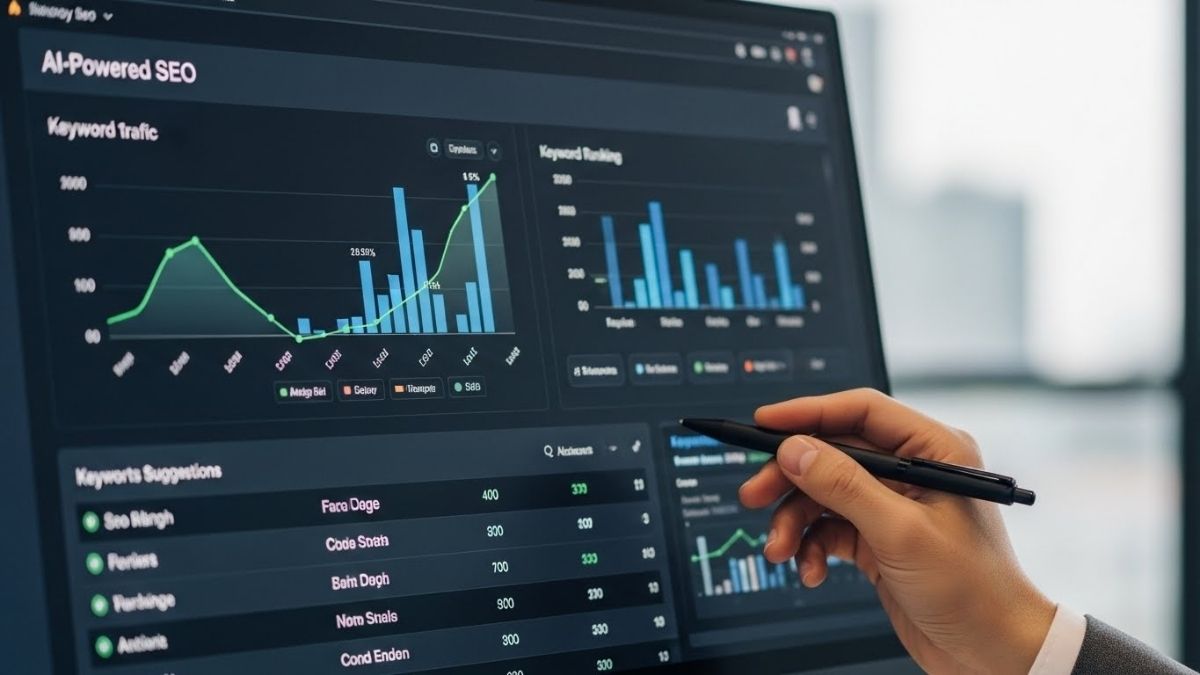
AI’s impact on Search Engine Optimization (SEO) and content strategy is profound. Generative AI tools can rapidly produce high-quality content, allowing companies to publish 42% more content each month . This increased output, combined with AI’s ability to analyze search trends and keyword performance, means:
•Faster Content Generation: 93% of marketers use AI to generate content faster .
•SEO Performance Uplift: 65% of businesses have seen an uplift in SEO performance due to AI marketing tools .
•Trend Identification: AI can identify emerging topics and keyword gaps, ensuring content remains relevant and discoverable.
4. Generative AI: Reshaping Content Creation and Creative Scaling
Generative AI (GenAI) has moved beyond novelty to become an indispensable tool for marketers in 2026. It’s not just about generating text; it’s about scaling creative output across all media types.
4.1. Text Generation and Copywriting
GenAI models can produce high-quality blog posts, social media captions, ad copy, product descriptions, and email content at an unprecedented speed. This frees up human marketers to focus on strategy and refinement, rather than repetitive writing tasks. The quality of AI-generated text has improved to a point where it’s often indistinguishable from human-written content, especially for routine communications.
4.2. Visual and Multimedia Content Creation
AI is underpinning visual media at scale. In 2026:
•71% of images shared on social media were either AI-generated or AI-edited .
•Platforms like TikTok host 1.3 billion videos labeled as AI-generated .
This means marketers can rapidly create diverse visual assets for campaigns, personalize images for different audience segments, and even generate short-form video content without extensive production costs. This capability is crucial for maintaining a fresh and engaging presence across visually-driven platforms.
4.3. Multimodal AI for Integrated Campaigns
Multimodal AI, which can process and generate content across text, image, audio, and video, is enabling truly integrated campaigns. A single AI system can generate a blog post, create accompanying images, draft social media updates, and even produce a short promotional video, all while maintaining brand consistency and message coherence. This streamlines the entire content pipeline, making campaigns more agile and impactful.
5. The Strategic Imperatives for Marketers in 2026
As AI continues to reshape digital marketing, marketers must adapt their strategies and skill sets. The focus shifts from execution to orchestration, from data collection to data interpretation, and from manual tasks to strategic oversight.
5.1. Data Governance and Ethical AI
With AI relying heavily on data, robust data governance and ethical considerations are paramount. Marketers must ensure data privacy, transparency in AI usage, and guard against algorithmic biases. Responsible AI practices build trust and maintain brand reputation, especially as regulations around data and AI become more stringent .
5.2. Human-AI Collaboration
The future of digital marketing is not about AI replacing humans, but about human-AI collaboration. Marketers will become
more strategic, creative, and empathetic, leveraging AI to handle repetitive tasks and provide data-driven insights. The ability to effectively prompt AI, interpret its outputs, and integrate it into broader strategies will be a key skill.
5.3. Continuous Learning and Adaptation
The AI landscape is evolving at an unprecedented pace. Marketers must commit to continuous learning, staying abreast of new AI tools, platforms, and methodologies. Agility and adaptability will be crucial for navigating this dynamic environment and consistently delivering value.
Conclusion: Marketing in the Age of Intelligent Automation
Digital marketing in 2026 is defined by intelligent automation, hyper-personalization, and creative scaling, all powered by AI. From predictive analytics that anticipate customer needs to generative AI that crafts compelling content, AI has become the indispensable partner for marketers seeking to achieve unprecedented levels of efficiency and effectiveness.
The global AI marketing market’s rapid growth, projected to reach over $100 billion by 2028, underscores the immense opportunities that lie ahead . Marketers who embrace AI not just as a tool, but as a transformative infrastructure, will be best positioned to drive innovation, foster deeper customer relationships, and secure a dominant competitive edge in the digital arena.
Embrace the AI revolution. The future of digital marketing is here, and it’s intelligent, personalized, and autonomous.